
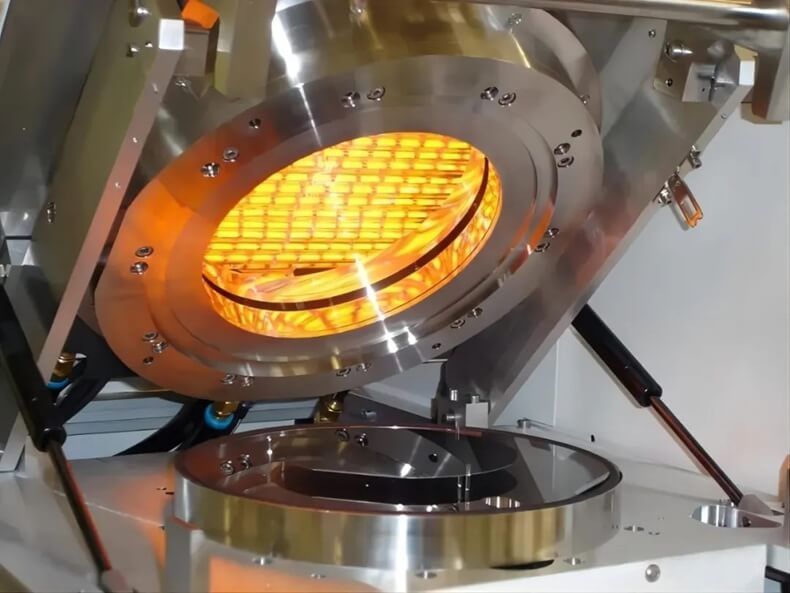
Getting More Heat Onto Your Wafers (Without Wasting Power)
When you’re heating silicon wafers, you’re basically in a fight against energy loss. Here’s the problem: standard quartz lamps throw heat in every direction—a full 360 degrees. If you don’t have a solid reflector in place, half of your power just vanishes into the machine chassis. It’s a waste. We use gold-coated reflectors to fix this. Instead of letting that energy escape, we bounce it right back onto the wafer. Why gold? It comes down to how gold handles infrared (IR) light. It’s just better at reflecting it than aluminum or polished steel. Less heat gets absorbed by the reflector, and more of it hits the target. By tightening that emission angle, we focus the energy. You get more punch—more watts per square centimeter—Without having to crank up the lamp voltage and stress your system. Finding the “Sweet Spot” The gap between your lamp and the wafer is where things get tricky. If you push the lamp too close, you’re asking for trouble. You’ll get hot spots and warped wafers. But if you pull it back too far? The energy drops off, and your cycle times start dragging. This is where the gold reflectors really help. They let you keep a safer distance without losing your heat flux. You get more breathing room for your cooling system and a much lower risk of contaminating the wafer. The Reality Check Now, gold isn’t a magic bullet. It has a weakness: it’s soft. If your maintenance team goes in there with abrasive scrubbing pads, they’ll scratch the gold right off. Once that happens, your reflectivity tanks. And yeah, gold costs more. If you’re doing low-precision work, aluminum is fine. But when you’re chasing those tight thermal specs and every single watt matters? Gold is the only way to actually get it done.