
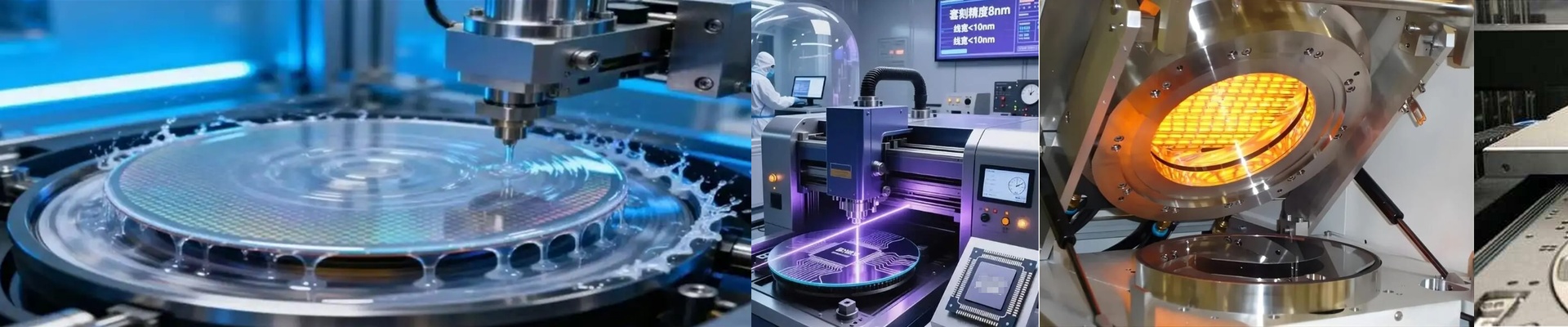
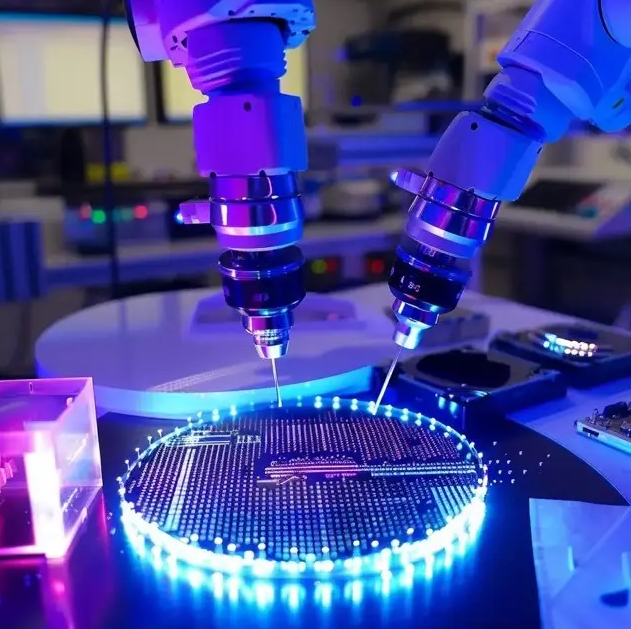
On the lithography floor, a 0.5°C drift in bake temperature will move your photoresist profile by nanometers—and that tiny shift turns into yield loss. We built the twin-tube infrared heating lamp for the steps where thermal budget is non-negotiable. It fills the gap between broad thermal tools and the precision your process actually needs, putting repeatable heat right where the wafer needs it. What matters under the hood The system runs on twin short-wave infrared tubes with quartz envelopes, picked for fast response and stable emissivity. Response hits the sub-second range, so ramp profiles track cleanly during soft bake and hard bake. Across the illuminated zone, wafer-level uniformity holds at ±0.1°C, and temperature repeatability stays consistent cycle after cycle. The lamp head is engineered for Class 1–100 cleanrooms, with materials and joints that keep particle generation near zero. Output remains stable over 5,000+ hours, dropping less than 5%, so the process window doesn’t drift between maintenance intervals. Why it holds up in photoresist processing In photoresist processing, you need heat that arrives fast, settles steady, and doesn’t leave anything behind. The twin-tube design concentrates energy for rapid temperature recovery, so you can shorten bake steps without stressing the film. The payoff is tighter critical dimension control, fewer rework lots, and line-of-sight thermal profiles that behave predictably across the wafer. You also save energy, because the lamp heats on demand and cools quickly—no idle losses. What to plan for on install and operation Installation needs a dedicated, shielded power feed, plus verified mounting clearances to keep the spot profile where it should be. The lamp works with most standard lithography and coat/bake tracks, but confirm integration at the tool level for interlock, sensor mapping, and safety. Low-humidity operation improves long-term stability; in humid environments, verify exhaust routing so condensation doesn’t form on the quartz envelope.