
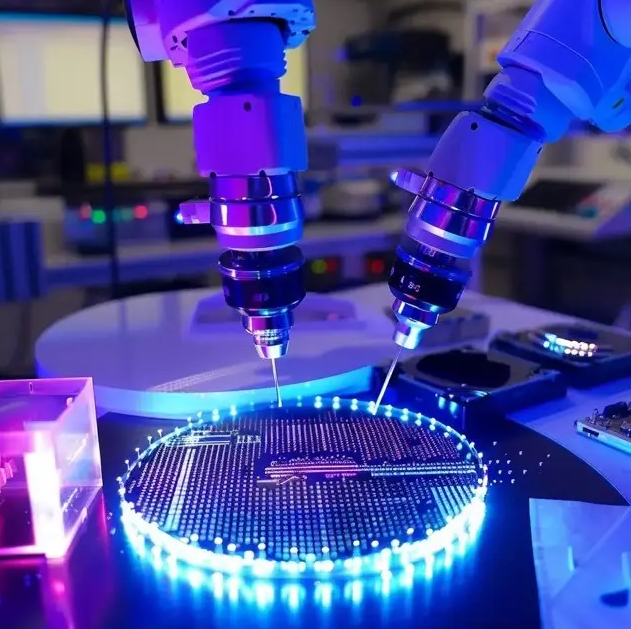
Making Your Smart Fab Actually Smart with Carbon Fiber Heat
If you’re planning out a new Smart Fab, you probably already know that your heat source can’t just be a “dumb” heater. It needs to do more than just get hot. That’s where carbon fiber infrared (CFIR) lamps come in. They’re basically the bridge between raw, heavy-duty power and the kind of digital control you actually need to run a modern line. The magic is in the filaments. Most people are used to old-school metal coils, but carbon fiber is a different beast. It offers a massive surface area for photons to jump off of, which means your wafer or substrate gets hit with a nice, even blanket of heat instead of hot spots. The best part? It doesn’t burn out nearly as fast as those cheap alloys. It handles the constant “on-off-on” cycle without breaking a sweat. You get a faster ramp-up, which means your batches move through the system quicker. It’s fast. Really fast. And that changes your whole workflow. Stop guessing. Start knowing. In a Smart Fab, you can’t have “mystery watts.” You need to track everything. CFIR systems plug right into your PLC-based PID controllers. Since these lamps react almost instantly when you tweak the voltage, you can nail your temperature tolerances down to ±1°C. That’s the real win here. You get a digital log of the thermal profile for every single run. If something starts to drift, you’ll see it in the data before you end up with a bin full of ruined parts. A quick heads-up on the electrical side. Here’s the thing: high-density infrared arrays pull a lot of juice. Even though CFIR is way more efficient than those old convection ovens, that “instant-on” feature creates some serious current spikes. Just make sure you don’t skimp on your power supplies or cabling. If you don’t spec them for those peaks, you’ll spend your morning resetting tripped breakers. Not a great way to start the day. Why it just works. For most cleanrooms, CFIR is a simple drop-in replacement for legacy heaters. No particulates, no mess, and hardly any maintenance. When you hook these up to a central data hub, you stop guessing if your heat soak was “about right.” You actually have the data to prove it.