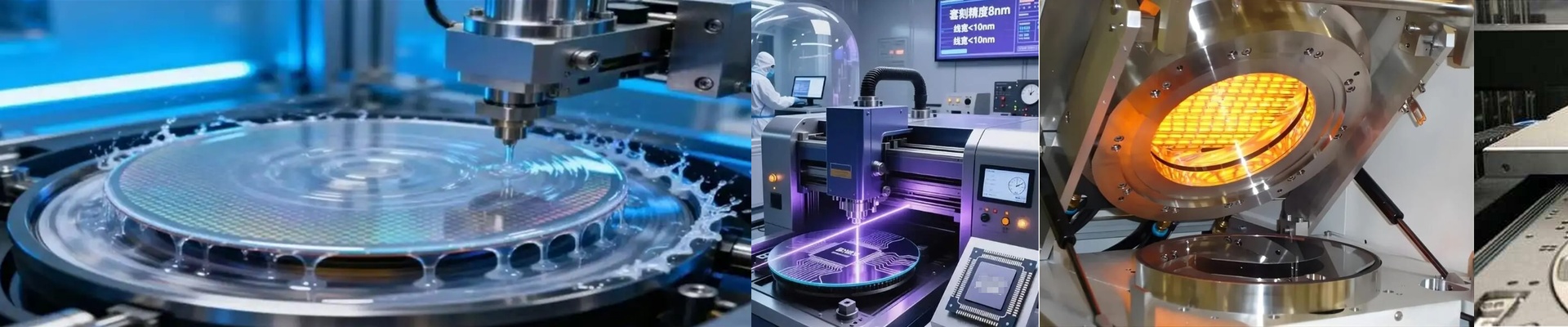
On the line, the cadence is relentless. A biosensor wafer flows from coat to expose, then into the bake track. The photoresist has to land at the right temperature—every time—inside a tight window. A few degrees of drift, a hotspot across the field, and you lose linewidth control, bake stress into the film, or worse: particles that crater yield. Infrared heating isn’t a nice-to-have here. It’s the thermal heartbeat of the process. When that beat stays steady, the line keeps moving. When it falters, you pay in scrapped wafers and lost hours.
What actually matters under the hood
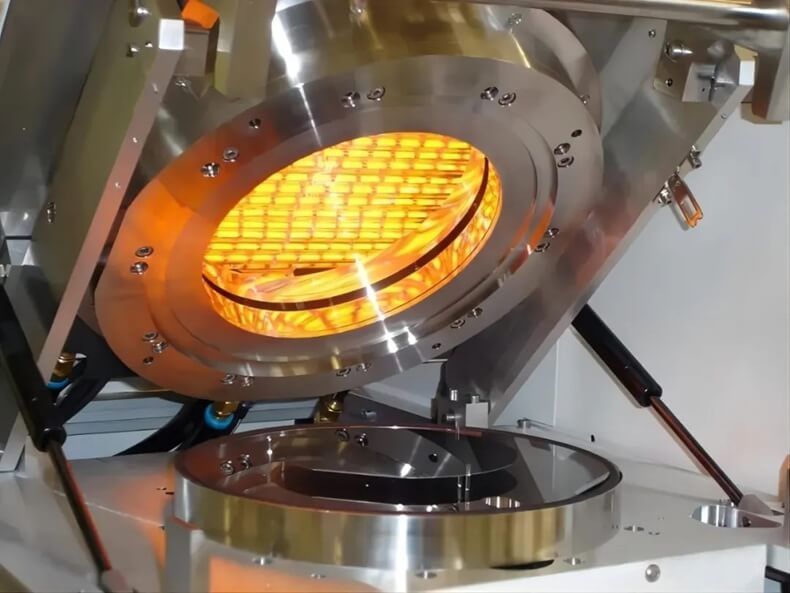
We build our infrared lamps for biosensor fabrication with near-infrared (NIR) emission, tuned to how standard photoresists and undercoat layers absorb. The wavelength window keeps energy in the film, not in the substrate, so you get rapid, direct heating with tight thermal control.
- Thermal uniformity:±0.1°C across the active bake zone. Not a spec-sheet flourish—this is what keeps critical dimension behavior consistent shot to shot, and stress in the resist stack repeatable.
- **Photoresist bake precision:**Soft bake and hard bake hold setpoint with minimal overshoot, even when you ramp fast. That’s what buys you stable lithography windows.
- **Cleanroom fit:**The lamp assembly is engineered for Class 1–100 environments. Sealed housings, low-outgassing materials, and a zero-particle approach keep contamination out of the process.
- **No particle generation:**No open filaments, no hot metal that sheds. Emitter geometry and materials are chosen to avoid particulate during continuous operation—critical for sensitive biosensor structures.
- 24/7 reliability:Components are rated for continuous duty. We talk lifetime in hours, not months, and design for planned maintenance, not surprise failures.
- **Repeatability:**Control loops are tuned around thermal inertia, so every wafer sees the same thermal budget. Process repeatability is the baseline, not a promise. The numbers matter because the stack is unforgiving. Biosensor devices pile up thin films and microstructures that don’t forgive variation. NIR gives you the responsiveness to hit setpoint quickly, and the uniformity to hold it across the wafer.
Why this approach fits biosensor work
Biosensor fabrication pushes thermal processes hard. You need fast ramps to keep cycle time tight, but you can’t trade precision for speed. A conventional hotplate can struggle with thermal lag and edge-to-center gradients, especially as wafer sizes climb. Properly engineered infrared heats the film directly, and the substrate comes along as a consequence. Result: shorter bake times, lower thermal load on the track, and more consistent results wafer to wafer. On the floor, that shows up as:
- Stable linewidth and sidewall profiles after lithography, because the resist experiences the same temperature profile each run.
- Fewer excursions and less rework, because the lamp holds setpoint under load without drifting.
- Cleaner processes, because the lamp isn’t adding to particle counts. That matters when you’re patterning microfluidic channels, electrodes, or bio-functionalized surfaces that can’t tolerate contamination.
- Maintenance you can plan, because the system is built for long life. Units run 5,000+ hours with less than 5% output drop under controlled conditions, and service intervals fit production schedules instead of fighting them. Reliability isn’t a slogan. It’s the ability to run 7×24 without unplanned stops. It’s being able to schedule a 3,000-hour preventive check and trust the line will still be running at hour 2,999. It’s repeatability that makes qualification straightforward and sustainment cleaner.
The details you’ll want to get right
Infrared lamps deliver performance, but they need to be integrated with care. The lamp has to match the track’s thermal envelope and mechanical interface. Power density, cooling paths, and mounting tolerances must align with the equipment footprint. Plan for cleanroom-compatible coolant lines and power connections, and make sure your controller can talk to the lamp’s feedback for closed-loop temperature control. There’s also the thermal budget to think through. NIR heating is fast and efficient, but it demands a tight thermal design to avoid localized hot spots at edges or array boundaries. We work with you to size the emitter array, tune the power profile, and set guard zones so uniformity stays consistent across the wafer. And yes, the lamp is built for long life—but not forever. Expect scheduled maintenance. Build lamp replacement windows into your preventive maintenance calendar. That’s not a weakness; it’s honest engineering. Controlling end of life is part of controlling the process. If you’re qualifying a new biosensor process or scaling an existing line, treat the infrared lamp as a process module, not just a heat source. Spec it with the same rigor you apply to optics, resist, and etch. Do that, and you get thermal behavior that matches your intent—and uptime that keeps the line moving.