
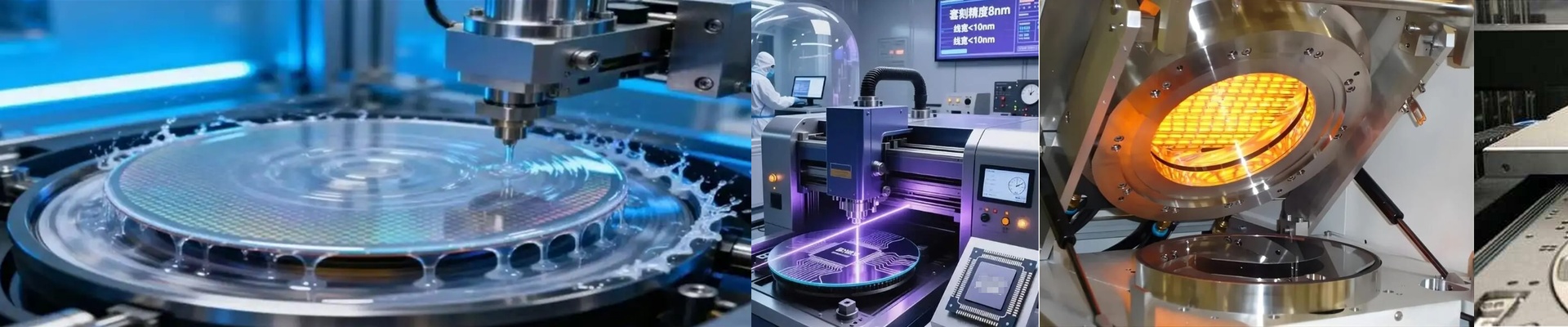
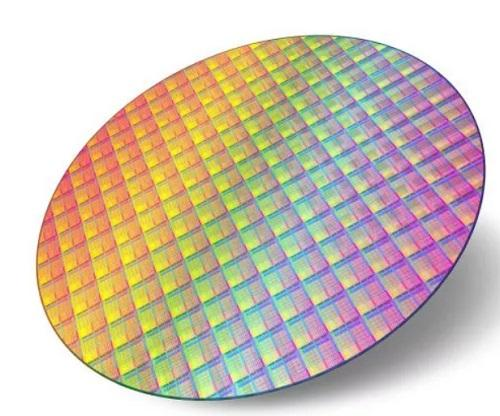
On the fab floor, a 0.5°C drift during the photoresist bake is enough to shift critical dimensions by nanometers and send particle counts climbing. We built our cleanroom infrared heater to stop that drift at the source. It locks onto the thermal profile right at the wafer, not just the chamber air, so soft bake and hard bake stay inside the thermal budget of advanced lithography. What matters, technically We run short-wave infrared with fast response and tight spectral control, matched to the absorption of the common photoresist stacks you see every day. Across the chuck, wafer-level uniformity holds at ±0.1°C, and repeatability lands cycle after cycle. It lives in Class 1–100 without adding particles, thanks to a sealed quartz emitter assembly, high-purity ceramic insulation, and an exhaust-free design. Output is stable from 100 W to 2.5 kW, and we’ve shown 24/7 reliability over 5,000+ hours with less than 5% output drop. Why it holds up in real processing In photoresist processing, temperature accuracy drives solvent removal, film stress, and CD control. The heater hits setpoint fast, so bake steps are shorter, and it keeps thermal cross-talk out of adjacent tools. You end up with a tighter CD distribution, fewer rework lots, and lower energy use because radiant transfer is efficient and standby power is low. Predictable yield. A process window you can count on. The practical details you’ll want to plan for Installation comes down to matching the tool’s mechanical envelope and electrical interface—typically 24 V control with CE-compliant isolation. The heater performs best when the distance to the wafer is fixed within ±2 mm; bigger gaps cut intensity and can widen the uniformity band. Plan for cleanroom-compatible mounting, and keep the window inspection on the schedule to hold irradiance and particle performance.