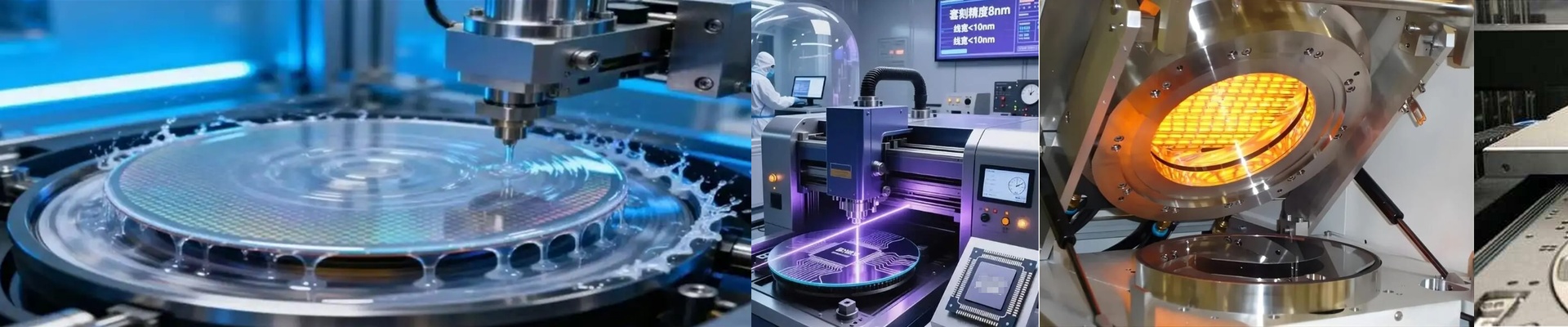
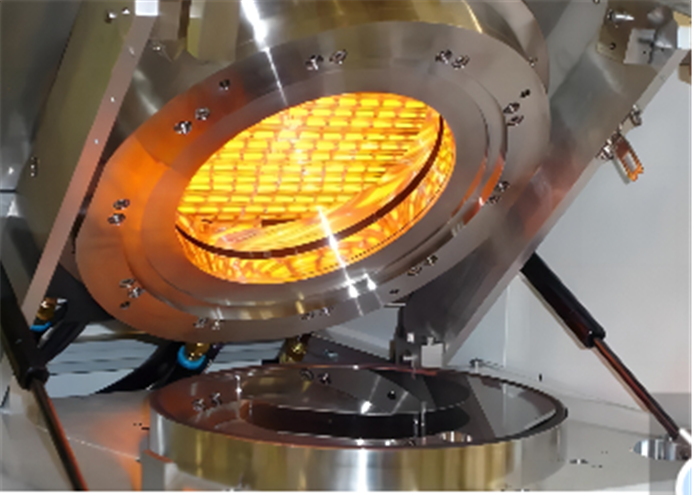
On the flexible display line, yield hinges on thermal control. A Soft Bake that drifts even 2°C throws CD uniformity off. A Hard Bake that runs hot or cold makes the resist profile unpredictable, and etch transfer gets ragged. The drying lamp can’t just be a heat source—it has to behave like a proper process instrument. What matters under the hood: we built the drying lamp around NIR, with quartz optics for rapid, contactless heating. Across the illuminated zone, wafer-level uniformity holds ±0.1°C, so every Soft Bake and Hard Bake gets the same thermal budget. It’s designed for cleanroom Class 1–100: low outgassing and zero particle generation under steady operation. The lamp can run 24/7 with predictable output, and repeatability holds lot after lot. Why this works in flexible display fabs: substrates are thin and thermally sensitive. The lamp ramps fast while staying tight on control, so you shorten cycle time without stressing the stack. Photoresist profiles stay stable, which keeps overlay within spec and etch critical dimension control consistent. Energy use drops because the lamp heats only the target area, and fewer rework lots mean less scrap. Here’s what to keep in mind. The lamp needs a clean, stable power supply and proper thermal management at the integration point. It’s compatible with most lithography and coating tracks, but you have to confirm the mounting interface and control signals during install. Plan a short commissioning run to lock in the Soft Bake and Hard Bake recipes, then qualify the process window before you push volume.