
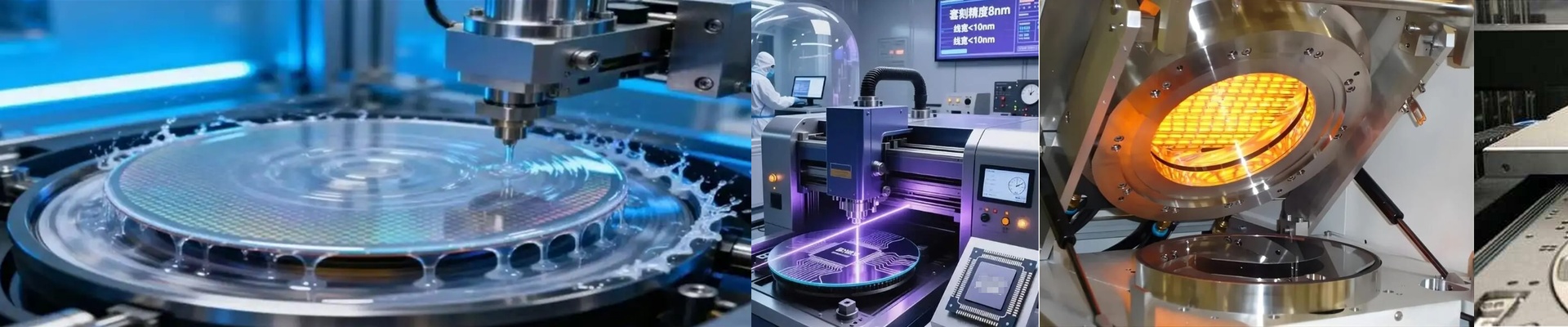
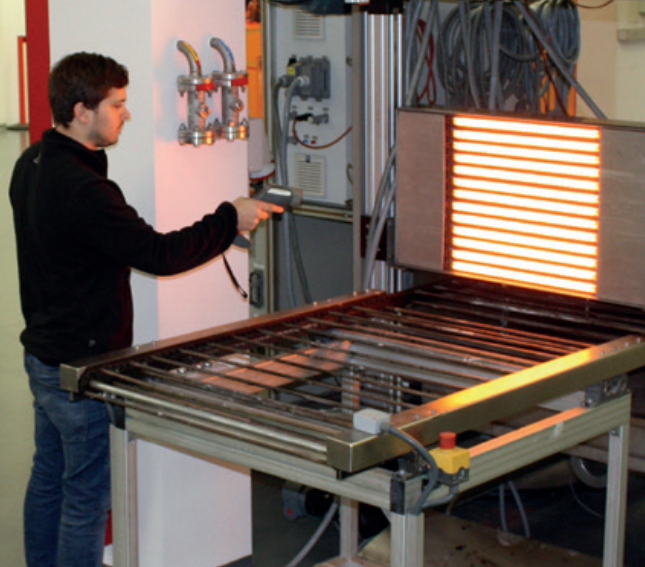
On the lithography floor, you know how it goes: a half-degree drift in bake temperature, and your critical dimension control is suddenly outside spec. The ruby infrared heating bulb, 230V, is built to keep that thermal profile on target—steady, hour after hour, whether you’re running soft bake or hard bake. What matters under the hood It’s a ruby-doped quartz envelope, pumping short-wave infrared for fast, localized heating with a quick cool-down. At 230V, it drops straight into standard semiconductor tool power architectures and stays stable in high-duty-cycle bake modules. Thermal uniformity across the target zone holds within ±0.1°C, and the filament geometry is laid out to minimize gradients right at the wafer plane. The materials and seals are chosen for ultra-low outgassing, so particle count stays within Class 1–100 cleanroom limits. Why this matters for photoresist Photoresist is picky about its thermal history. This bulb keeps the bake curve stable, which improves repeatability lot to lot and cuts down excursions in CD and residue metrics. The fast response shortens cycle time without giving up profile control, and the efficient infrared coupling lowers energy per wafer. Field units are seeing 5,000+ hours with less than 5% output drift, which translates into fewer interventions and more predictable maintenance windows. Field notes you’ll appreciate Installation comes down to orientation. The bulb performs best when aligned along the tool’s optical axis; tilt it beyond spec and you’ll introduce nonuniformity. Make sure the fixture and reflector are compatible with 230V, and confirm the interlock and thermal monitoring match the response time of the short-wave source. Treat the envelope like a precision component—avoid contact with oils or solvents during handling, or you’ll risk contamination that can spike particle generation.