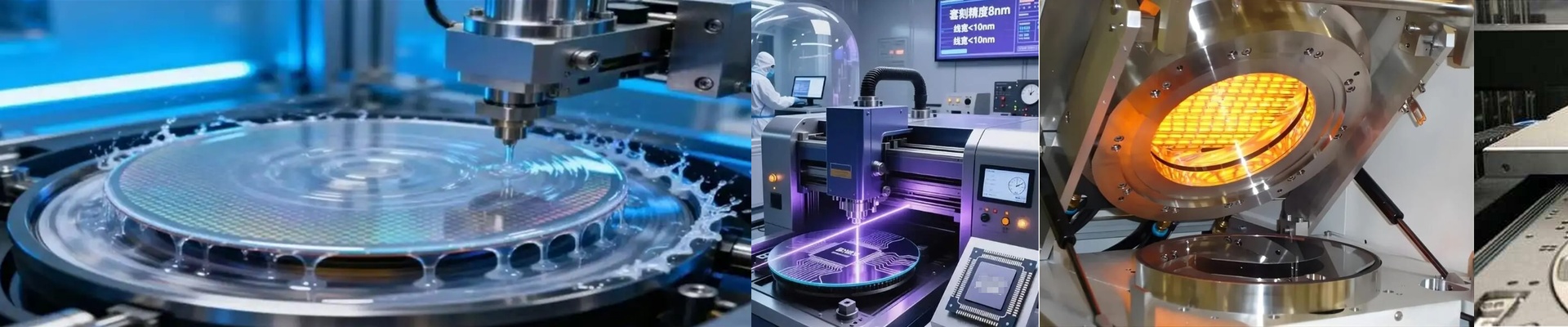

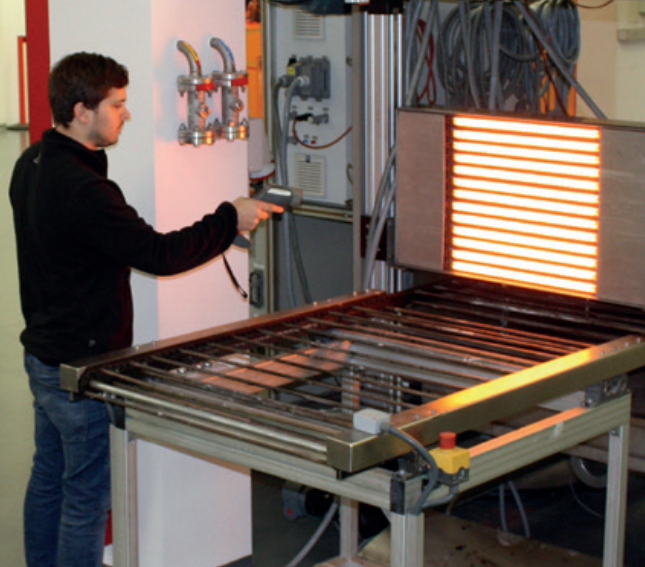
On the lithography floor, a bake that drifts even 0.2°C will shift CD, invite footing, and tank yield in a hurry. Coater/developer lines need heat that hits fast, settles exactly, and holds steady while the wafer runs through soft bake and hard bake. When the IR heaters cough, you pay for it in scrap, rework, and surprise downtime. What matters under the hood We built these coater/developer IR heaters around near-infrared (NIR) emission, so energy goes straight into the photoresist. You get sub-second thermal response and wafer-level uniformity of ±0.1°C across the bake zone. Temperature repeatability stays locked down, so every lot sees the same thermal budget. The quartz emitter design runs clean—no particle generation—so it stays right at home in Class 1–100 cleanrooms. Control is closed-loop, with calibrated sensors and a setpoint that holds steady around the clock without drift. Why it fits the workflow This heater is built for the coater/developer cadence: it hits target temperature quickly, holds it through the bake cycle, and cools down on cue so throughput doesn’t get strangled. Soft bake and hard bake profiles stay consistent, which tightens CD control and cuts down on edge-bead issues. Energy use drops because NIR energy is delivered on demand, with minimal wasted heat. Reliability is proven in production—units run 5,000+ hours with minimal output loss, which means fewer spares, fewer maintenance windows, and a lower cost per wafer. What you need to get right Installation demands precise optical alignment and a clean, reflective cavity. If those are off, you’ll start seeing hot spots and nonuniformity sneak in. The heater works with standard coater/developer platforms, but you still need to verify integration details—mounting, aperture, and control interface—against your specific machine and process recipe. Plan a short commissioning run to lock in setpoints and confirm the uniformity map before you go to production.