
Stop Wasting Your Wattage: Why Gold Reflectors Matter
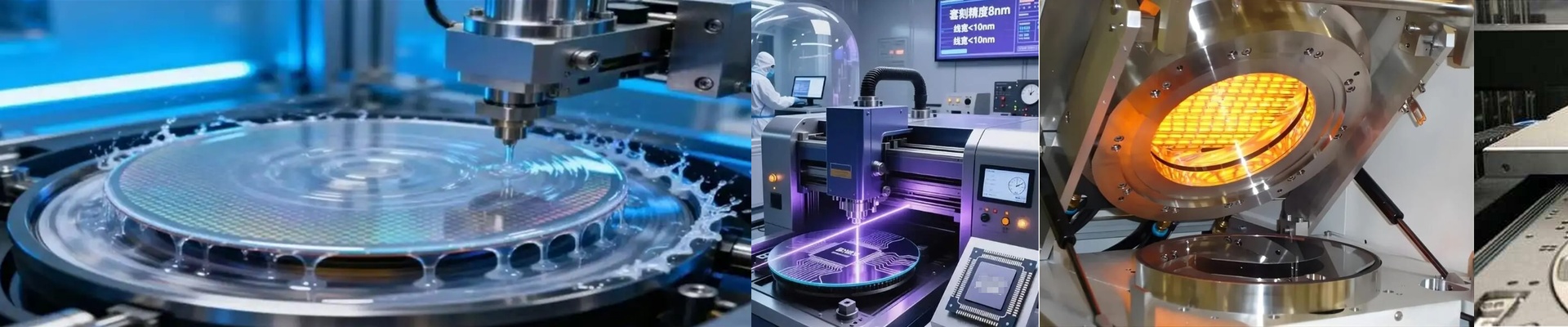
In semiconductor processing, every watt you waste is basically a design flaw. Think about it: when you fire up those high-power heating elements, a huge chunk of that infrared energy just wanders off. It goes backward, it goes sideways—basically anywhere except where it’s actually supposed to go. We fixed this by putting gold-coated reflectors right into the heater assembly. Why gold? Look, polished aluminum or stainless steel looks shiny to the eye, but they’re secretly soaking up energy at the wavelengths we use for wafer heating. Gold is different. It bounces back over 98% of infrared radiation. Instead of heating up your machine’s chassis (which does nothing for you), the gold pushes that energy straight onto the wafer. You get way more heat for every single watt you pay for. It’s all about the shape The stainless steel housing does the heavy lifting here. We carve these into very specific parabolic or elliptical curves to focus the radiation into a tight, precise beam. Precision is everything. If the housing is off by even a couple of millimeters, you’ll end up with cold spots on your wafer, and then you’ve got a problem. We machine the base for strength, then add that gold layer to keep the thermal footprint steady across the whole surface. The honest trade-offs Now, it’s not all magic. Gold costs more upfront. It’s also softer than raw steel, so if your team is reckless during installation, they’ll scratch it. And please, for the love of everything,do notuse abrasive scrubbing pads on these reflectors. You also have to keep an eye on your heat density. Since we’re focusing almost all the energy onto the wafer, the lamp doesn’t “soak” in its own reflected heat, which means it can run hotter. Just make sure your cooling fans are actually beefy enough to handle that concentrated load at the focal point. Otherwise, you’ll risk overheating the edges of the wafer.